
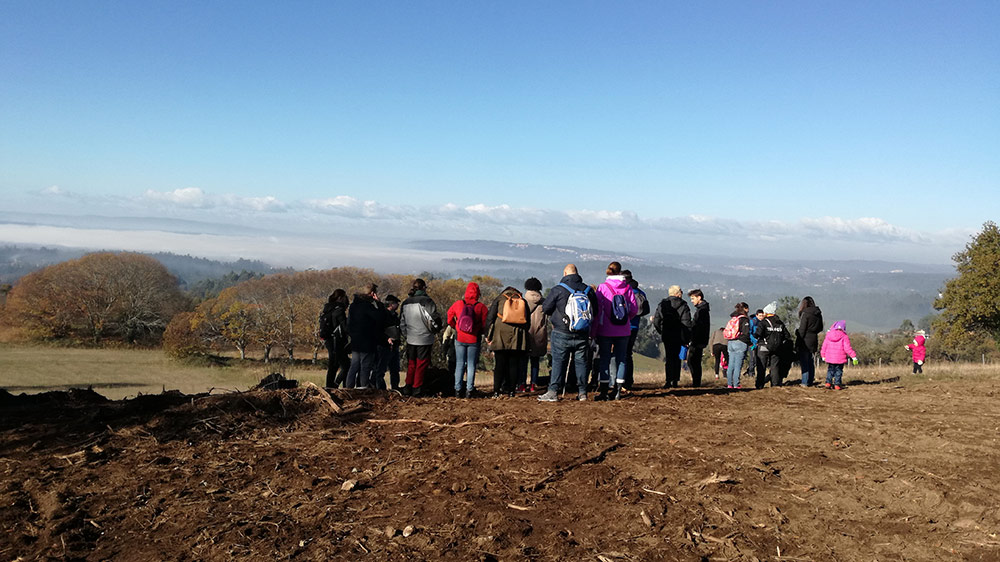


O monte demostrativo do Pico Sacro está situado no concello de Boqueixón (parroquia de Lestedo), na provincia da Coruña, e pretende converterse nun lugar de referencia para as persoas interesadas en coñecer técnicas silvícolas e procedementos sostibles de xestión de plantacións de frondosas para a produción de madeira de alto valor compatibles coa conservación de valores ambientais.
Foi deseñado para permitir a realización de actividades divulgativas dirixidas aos potenciais usuarios: propietarios forestais, comunidades de montes veciñais, xestores forestais, alumnos de escolas forestais, estudantes, investigadores e expertos. O deseño do monte permite un acceso cómodo, conta con sinalización das as parcelas demostrativas e de itinerarios didácticos.
O proxecto de monte demostrativo alberga modelos silvícolas que fan compatible a súa función de sumidoiro biolóxico de gases de efecto invernadeiro co aproveitamento de distintos produtos forestais, madeireiros e non madeireiros.
O proxecto busca a difusión entre os propietarios forestais galegos destes modelos silvícolas e pretende que o monte sirva de lugar de referencia a escala operativa para divulgar técnicas e coñecementos silvícolas, así como para practicar procedementos sostibles de xestión dos recursos.
O desenvolvemento deste proxecto parte dunha idea orixinal da AFG que contou coa colaboración dun equipo de expertos de varias institucións moi involucradas na mellora dos montes galegos.
O proxecto foi patrocinado polo Grupo INDITEX e co respaldo deste grupo se desenvolven as actividades divulgativas e formativas que se organizar durante todolos anos . Este grupo empresarial, no marco da súa política corporativa de compromiso ambiental e social, promove liñas de investigación no ámbito da silvicultura, entre outras a mellora xenética de diversas especies forestais arbóreas como a cerdeira (Prunus avium), o castiñeiro (Castanea x hybrida) e outras que é preciso introducir nos montes galegos para cerrar o ciclo e permitir que estas innovacións e coñecementos cheguen aos silvicultores galegos.
O monte demostrativo foi inaugurado o 21 de marzo de 2018, coincidindo coa celebración do Día Internacional dos Bosques
Os propietarios do monte e a xestión
O monte demostrativo ocupa unha superficie de 18 ha e pertence a once propietarios forestais que subscribiron un acordo a longo prazo coa Asociación Forestal de Galicia para a xestión das súas propiedades. Antes de iniciar a intervención, o recinto presentaba un alto grao de deterioro, con masas de eucalipto procedentes de antigos incendios e moi afectadas por ataques de goniptero, parcelas que evolucionaron de forma natural sen ningún coidado e cultivos agrarios con baixo nivel de explotación.
O monte é xestionado polo equipo técnico da Asociación Forestal de Galicia coa colaboración de expertos do Forest Stewardship Council (FSC) e e da Asociación pola Conservación do Ecosistema Forestal Galego (ACEFGA).
Características do monte e as plantacións e intervencións realizadas
O monte está situado na ladeira sur do Pico Sacro, en terreos característicos da interface agrícola-forestal onde na actualidade se mesturan cultivos forraxeiros, plantacións forestais e rodais de frondosas.
As características estacionais e forestais mais relevantes son as seguintes:
- Altitude: 300 a 350 m
- Orientación: predomina solaina
- Precipitación anual: 1.200-1.400 mm
- Temperatura media anual: 13 ºC
- Solos: derivados de rochas gnéisicas de carácter silícico, con textura de tendencia franco areosa a franca e baixo contido de minerais alterables.
- Superficie actual: 18 ha
- Superficie de solo forestal: 10 ha
- Superficie de solo agropecuario: 8 ha
- Propietarios participantes na iniciativa: 11
- Parcelas catastrais agrupadas: 14
- Especies utilizadas: cerdeira, nogueira, castiñeiro e carballo americano
- Produtos principais a obter: madeira de alto valor, cogomelos e froitos forestais
- Produtos secundarios: forraxe (millo e herba) O monte está dividido en dúas zonas que responden á clasificación do solo rústico (forestal e agropecuario) existente no conxunto da parcela. Ademais, o monte presenta, distribuída por todo o recinto áreas de conservación e custodia cos enclaves ecolóxicos máis singulares.
Que hai plantado?
No Monte demostrativo do Pico Sacro empregouse castiñeiro, cerdeira, nogueira e carballo americano, planta que procede de material xenético mellorado polo Centro de Investigación Forestal de Lourizán no marco dos proxectos promovidos polo Grupo INDITEX.
Tamén se empregou material procedente de recoñecidos viveiros e de centros de investigación do sur de Europa.
Visitas ao Monte demostrativo do Pico Sacro
As visitas son organizadas pola AFG previa solicitude das entidades interesadas, e os visitantes estarán acompañados por expertos formados para estes fins.
Os visitantes poden observar:
- Plantacións que amosan resultados das liñas de investigación de mellora xenética, comprobando o crecemento do arborado.
- Informarse dos métodos de plantación e fertilización empregados e dos seus custos.
- Visualizar e practicar operacións silvícolas como son as podas de formación e de calidade, os tratamentos sanitarios preventivos, ou a recollida de froitos e cogomelos.
- Observar os coidados das áreas de conservación e custodia destinados a mellorar os hábitats naturais.
- Coñecer as producións en madeira de alto valor, froitos e cogomelos e informarse sobre os resultados económicos.
- Comprobar as vantaxes de dispoñer de certificación forestal e da venda de aproveitamentos certificados.
